Live Call Features
Live Call Features
Everything a receptionist would do behind the counter, from a video call.
During a live video call, the call window gives you a set of tools to serve visitors as if you were at the front desk. You can capture IDs, collect documents, get signatures, print, share information and even take payments. Everything you capture or collect during a call is saved in History > Call logs for future reference.

ID capture
Click ID capture to ask the visitor to show their ID to the station’s camera.
- A window appears on the station asking the visitor to agree to share their ID.
- Once the visitor accepts, the station screen splits so they can line up their ID with the camera.
- When the ID is clear and readable, click Save to capture it.
- After a few seconds, review the image and save it, or retake it if it is not clear enough.
Retaking the picture replaces the previous one. To keep several pictures, use Screenshots instead.
Digital scanner
The digital scanner needs no hardware: it uses the visitor’s own phone.
- Click Scanner. A QR code appears on the station screen.
- The visitor scans the code with their phone, which opens a secure web page.
- The visitor takes a photo of a document or uploads one from their phone’s photo library. They can send several images.
- A live preview lets you check the quality before the images are submitted.
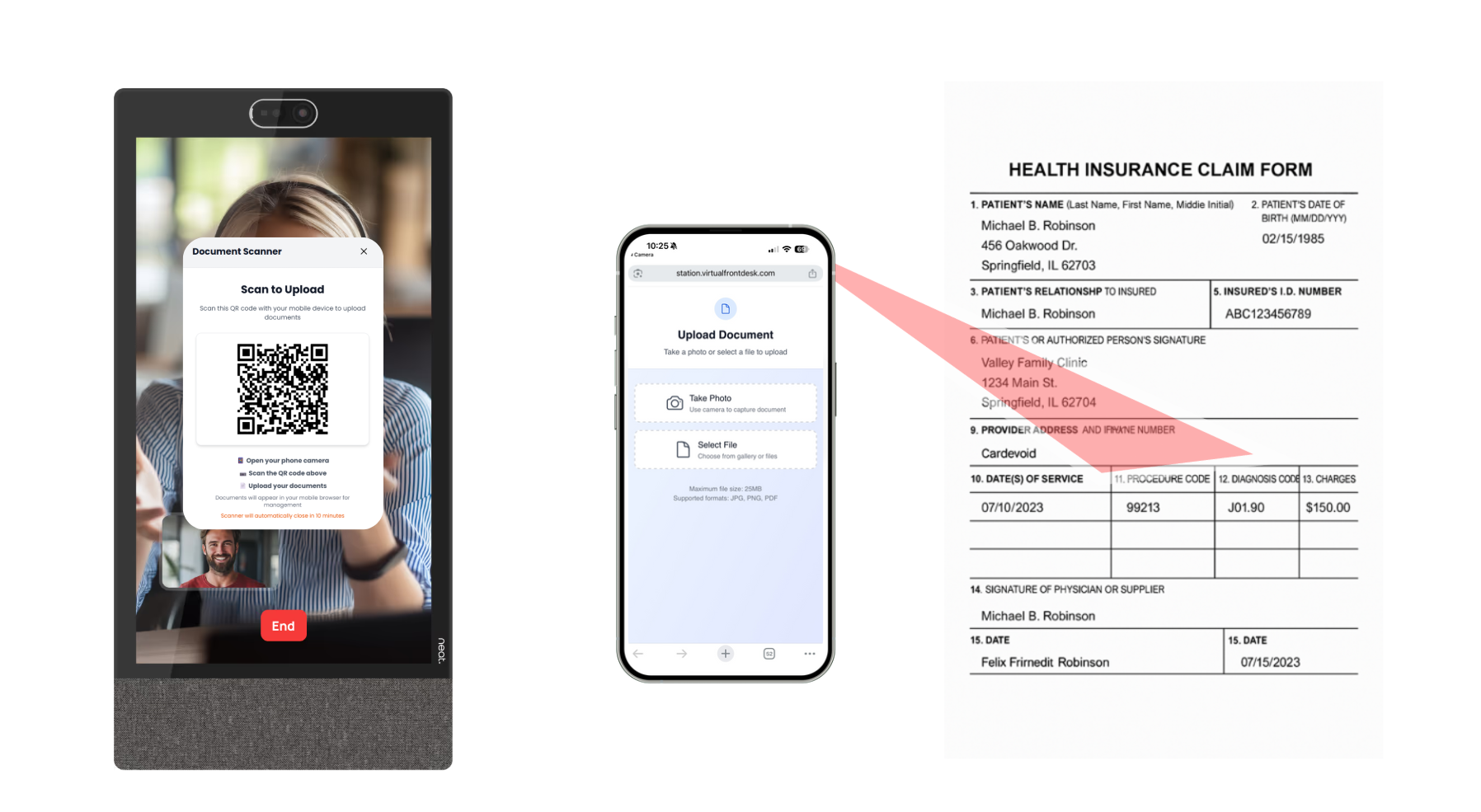
The digital scanner: QR code on the station, upload page on the visitor’s phone
To learn more, read Digital Scanner.
Send documents and iFrames to the screen or printer
You can send a PDF to the station screen or to the printer connected to the station, and ask the visitor to add their name, email and signature if needed.
- Choose a PDF from your Content library, or upload a PDF from your computer and send it straight to the station screen, without adding it to the Content library first.
- Send an iFrame, such as a fillable online form, from the iFrames in your Content library.
Signed documents are stored securely in your History. To learn more, read Documents, PDFs, QR Codes & iFrames and Printer, Printing Badges and Documents.
Screenshots
Take as many screenshots of the call as you need. Every image is saved automatically in your History.
QR codes
Enter a full URL, including https://, to display it as a QR code on the station. The visitor scans it with their phone to open the link.
Chat
Send a one-way text message to the station screen. The visitor can read the message but cannot reply.
Hold
Hold mutes your camera and microphone and displays “You have been put on hold.” on the station screen. Take the call off hold to resume the conversation.
Live translated closed captions
Closed captions display what the visitor says during the call as text on your screen, translated automatically into your dashboard’s language. The captions follow the language the visitor selects on the station.
For example, if a visitor selects French on the station and speaks French, a receptionist whose dashboard is in English reads the visitor’s words in English.
Closed captions are turned on for the whole organization and appear automatically in every call, including calls answered in Microsoft Teams. To turn them on, an administrator goes to Settings > Organization > Features and turns on Closed captions.
Switch between calls
If another call arrives while you are on a call, you can switch from one call to the other. For example, greet the new visitor, let them know you will be right with them, and return to the first call.
Share screen
Share your screen with the station, for example to show a map, a document or a website to the visitor.
Quick Access
Click Quick Access to open your favorite website in a new browser tab with a single click. To learn more, read Quick Access button.
POS terminal
Send an invoice to the station screen for the visitor to review, and a payment request to the Stripe Terminal so they can pay by credit or debit card.
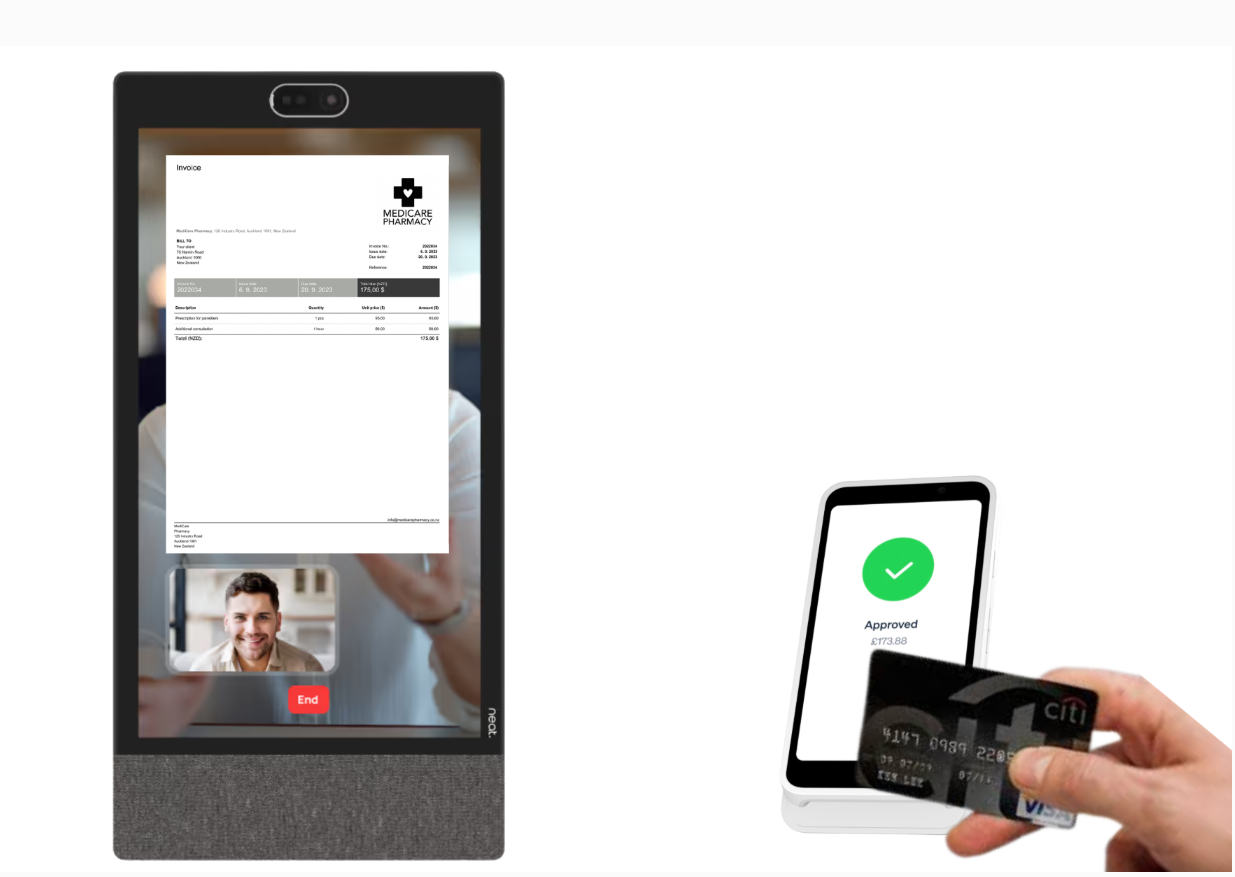
An invoice on the station screen and a payment on the Stripe Terminal